


Receive free Food & Beverage updates
We’ll send you a myFT Daily Digest email rounding up the latest Food & Beverage news every morning.
The World Health Organization has classified aspartame, an artificial sweetener commonly found in carbonated drinks, as “possibly carcinogenic”, elevating the risk of a consumer backlash for beverage giants such as PepsiCo and Coca-Cola.
The global health body said the revised classification was based on limited evidence and that its recommendation that people restrict their daily intake to no more than 40mg per kg of body weight — or between nine and 14 cans of a typically sized soft drink — was unchanged.
However, any scientific uncertainty over whether artificially sweetened food and drink is healthy is a risk for consumer goods companies under pressure to reduce sugar levels in products and overhaul their unhealthy image.
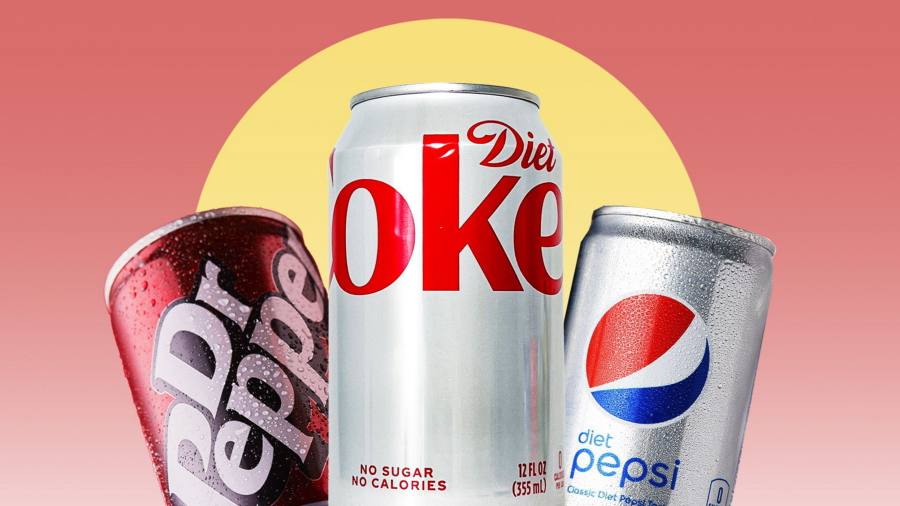
The industry’s response to calls for them to combat obesity and lower sugar content in junk food and drink has been to promote zero-calorie alternatives. Aspartame is among the most widely used artificial sweeteners in food and drink, found in products from low-sugar carbonated drinks such as Diet Coke, Fanta Zero and Diet Pepsi to Mars’ Extra sugar-free chewing gum and Müller light yoghurts.
For decades, scientists have debated whether artificial sweeteners are good or bad for us, leading to confusion among consumers on whether a Coke or a Diet Coke is the healthier choice.
Representatives of the soft drinks industry argued the WHO’s announcement was confirmation that aspartame was safe to consume.
Kate Loatman, executive director of the International Council of Beverages Associations, the global beverage trade body, said the decision “will play a vital role in informing consumers as they consider all options to reduce sugar and calories in their diets”.
PepsiCo and Coca-Cola declined to comment. Müller said it used very small quantities of aspartame in some of its products and regularly reviewed its ingredients to ensure they comply with requirements.
The WHO said that while it had not changed its advice on the daily intake limit, companies could consider reassessing their ingredient formulations to move away from artificial sweeteners.
“We’re not advising companies to withdraw products or consumers to stop consuming altogether, just a bit of moderation,” said Francesco Branca, director of the department of nutrition and food safety at the WHO.
“It’s about changing the formulation of products, and the choice of ingredients so you can have tasty products without the need to use sweeteners,” he said.
Food safety regulators are unlikely to change their advice following the WHO news. The Food Standards Agency’s chief scientific adviser, Professor Robin May, said the report supported the UK watchdog’s view that aspartame was safe to consume but it welcomed the WHO’s call for further research “to help increase understanding of this potential issue”.
However, official guidance has not stopped consumers from shying away from diet drinks containing aspartame in the past. Concerns over the possible carcinogenic effects of the sweetener led to a decline in demand for diet sodas in the 2000s into the 2010s.
In 2015, PepsiCo removed aspartame from Diet Pepsi following consumer concerns over its effects, which had led to a long-term decline in demand for low- and no-sugar beverages.
“Diet cola drinkers in the US told us they wanted aspartame-free Diet Pepsi and we’re delivering,” said Seth Kaufman, senior vice-president of the company’s Pepsi and flavours portfolio at the time. Yet the reformulation failed to prevent a further dip in sales and the drinks-and-snacks company reintroduced the sweetener a year later.
The threat of widening sugar taxes and stricter labelling requirements in the US, UK and Europe has made the need for consumer goods companies to reduce sugar content in their products more urgent.
However, the WHO’s latest findings raise another red flag over whether artificial sweeteners are the answer.
In 2014 a study from Israel’s Weizmann Institute concluded that using artificial sweeteners could promote obesity. The WHO earlier this year said consumers should avoid sweeteners altogether because evidence suggests they do not reduce body fat and may be linked to an increased risk of type 2 diabetes, cardiovascular disease and death.
“Widespread concerns over artificial sweeteners are a major challenge to low-, no- and reduced-sugar product development, especially in the soft drinks market, where the use of these ingredients has become increasingly prevalent,” said Emma Clifford, associate director at market research company Mintel.
“Products that are able to boast that they are ‘free from sweeteners’ within categories where these ingredients are commonly used should do so prominently on-pack and in their marketing to tap into these.”
One risk for companies, particularly those based in the US, is the threat of litigation. Assurances from regulatory bodies have in the past failed to protect companies from class-action lawsuits over possibly carcinogenic properties.
German conglomerate Bayer is trapped in a long-running legal battle in the US following its $63bn acquisition in 2016 of seed maker Monsanto, which left the group exposed to litigation over allegedly cancerous weedkiller Roundup. Bayer maintains the product is safe and says scientific research supports that view. The US Environmental Protection Agency said there were no risks of concern to human health from current uses of glyphosate, the ingredient used in Roundup.
Read the full article here