


Receive free US foreign policy updates
We’ll send you a myFT Daily Digest email rounding up the latest US foreign policy news every morning.
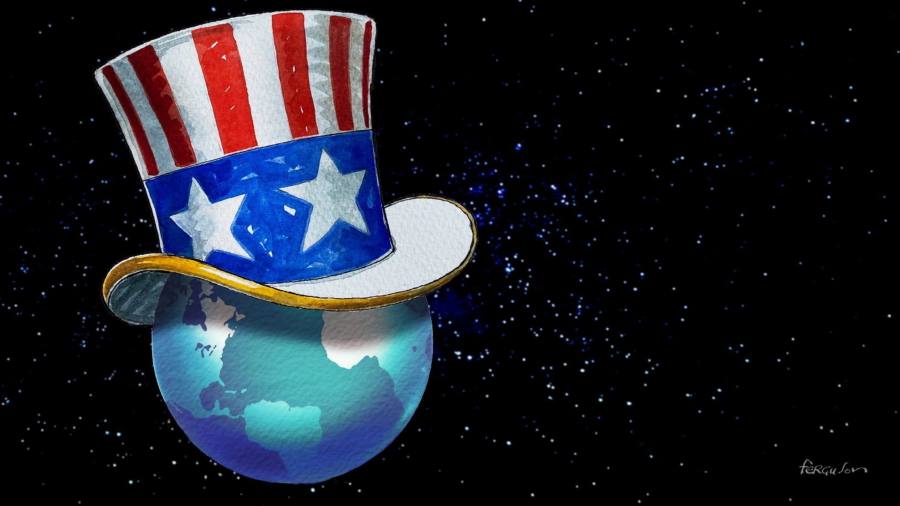
When the US talks, the world listens. It is, after all, the world’s most influential power. This is not due only to its size and wealth, but also to the potency of its alliances and its central role in creating the institutions and principles of today’s order. It played the decisive part in creating the Bretton Woods institutions, the General Agreement on Tariffs and Trade and the World Trade Organization. It promoted eight successive rounds of multilateral trade negotiations. It won the cold war against the Soviet Union. And from the early 1980s, it pushed for a deep and broad opening of the world economy, welcoming China into the WTO in 2001. Whether we like it or not, we all live in the world the US has made.
Now, suffering from buyer’s remorse, it has decided to remake it. Janet Yellen, US Treasury secretary, outlined the economic aspects of the new US vision in a speech delivered on April 20. Seven days later, Jake Sullivan, the national security adviser to Joe Biden, gave an even broader, albeit complementary, speech on “Renewing American Economic Leadership”. It represented a repudiation of past policy. It could just be seen as a return to Alexander Hamilton’s interventionism. Yet, this time, the agenda is not for a nascent country, but for the world’s dominant power.
What was Sullivan saying? And what might it mean for the US and the world?
The starting point is domestic. Thus, a “shifting global economy left many working Americans and their communities behind. A financial crisis shook the middle class. A pandemic exposed the fragility of our supply chains. A changing climate threatened lives and livelihood. Russia’s invasion of Ukraine underscored the risk of over-dependence.” More narrowly, the administration sees itself as confronting four huge challenges: the hollowing out of the industrial base; the rise of a geopolitical and security competitor; the accelerating climate crisis; and the impact of rising inequality on democracy itself.
In a key phrase, the response is to be “a foreign policy for the middle class”. What, then, is this supposed to mean?
First, a “modern American industrial strategy”, which supports sectors deemed “foundational to economic growth” and also “strategic from a national security perspective”. Second, co-operation “with our partners to ensure they are building capacity, resilience, and inclusiveness, too”. Third, “moving beyond traditional trade deals to innovative new international economic partnerships focused on the core challenges of our time”. This includes creating diversified and resilient supply chains, mobilising public and private investment for “the clean energy transition”, ensuring “trust, safety, and openness in our digital infrastructure”, stopping a race to the bottom in corporate taxation, enhancing protections for labour and the environment and tackling corruption.
Fourth, “mobilising trillions in investment into emerging economies”. Fifth, a plan to protect “foundational technologies with a small yard and high fence”. Thus: “We’ve implemented carefully tailored restrictions on the most advanced semiconductor technology exports to China. Those restrictions are premised on straightforward national security concerns. Key allies and partners have followed suit.” It also includes “enhancing the screening of foreign investments in critical areas relevant to national security”. These, Sullivan insists, are “tailored measures”, not a “technology blockade”.
This is indeed a fundamental shift in the goals and means of US economic policy. But both the depth and the durability of these shifts depend on how far it reflects a new American consensus. Where it is nationalist and protectionist, it already surely does. Where it downplays the priorities of business and the role of markets, it could also prove durable. Donald Trump’s populist Republicans could surely accept almost all of this.
Do the new objectives make sense? In some fundamental respects, yes. Having just published a book called The Crisis of Democratic Capitalism, I agree that the anger and disappointment of what Americans call “the middle class” is a dangerous reality. I agree, too, that climate is an important priority, supply chains need to be resilient and national security is a legitimate concern in trade policy. Russia has surely taught us that.
Yet will it actually work to make Americans and the rest of us better off and safer? One doubt concerns the scale. Sullivan states, for example, that it is “estimated that the total public capital and private investment from President Biden’s agenda will amount to some $3.5tn over the next decade”. That is at most 1.4 per cent of gross domestic product over that period, which is far too little to be transformative. Another is that it is hard to make industrial policy work, especially for economies on the technology frontier. Another concerns how disruptive this new approach will be for economic and political relations with the rest of the world, notably (but not only) with China, especially on trade.
In particular, it is going to be hard to distinguish purely commercial technologies from ones with security implications. It is also going to be tricky to distinguish US friends from foes, as global reactions to Russia’s invasion of Ukraine shows. Not least, it is going to be hard to persuade China that this is not the beginning of an economic war upon it. Yet China already holds many cards in such a fight, as Harvard’s Graham Allison has noted for the case of solar panels. Rare earths are another such case.
Above all, the new approach will only work if it leads to a more prosperous, peaceful and stable world. If it leads to a fractured world, environmental failure, or outright conflict, it will fail in its own terms. Its authors need to be careful in calibrating the execution of their new strategy. It could backfire badly.
Follow Martin Wolf with myFT and on Twitter
Read the full article here