


Unlock the Editor’s Digest for free
Roula Khalaf, Editor of the FT, selects her favourite stories in this weekly newsletter.
Blue Origin has for the first time landed the booster rocket for its largest spacecraft in a step forward for Jeff Bezos’s space venture as it tries to rival Elon Musk’s SpaceX in the satellite launch market.
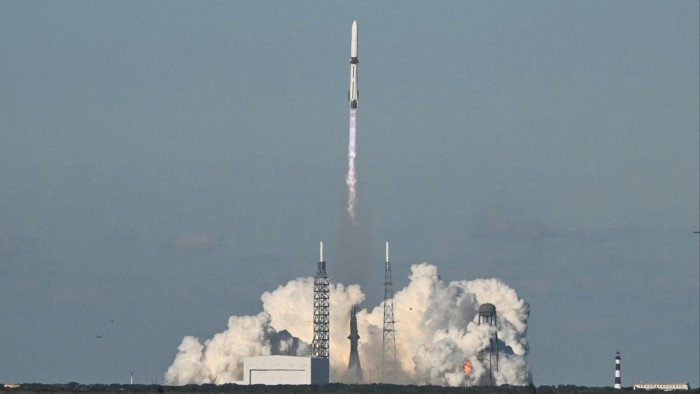
The company launched its 98-metre rocket called New Glenn from Florida’s Cape Canaveral Space Force Station at 3.55pm on Thursday, several months later than planned and nearly a year after Blue Origin conducted its inaugural flight.
Blue Origin, owned by the Amazon founder, is behind Musk’s SpaceX in its efforts to become a big commercial space launch provider. It has secured a number of multibillion-dollar contracts with Amazon and the US government, but these are contingent on New Glenn launching at a regular rate.
New Glenn’s second flight is ferrying Nasa’s ESCAPADE mission, two research spacecraft that will try to reach Mars, as well as a terminal from satellite communications company Viasat that is part of a different project for the US space agency.
The rocket’s maiden flight in January saw the Blue Origin craft reach orbit safely, five years later than planned, though its reusable booster failed to land as planned.
On Thursday, Blue Origin managed to land the booster on a barge in the Atlantic Ocean.
Prior to January, Blue Origin had only launched its New Shepard rocket, which ferries space tourists into sub-orbit. Pop star Katy Perry and crypto billionaire Justin Sun have both been passengers, while Bezos rode on the first flight in 2021.
The reusable booster rocket for New Shepard has landed successfully, while New Glenn has now done so once. SpaceX has completed this manoeuvre more than 500 times.
SpaceX adopts a more aggressive approach to launches and most recently suffered a series of explosive failures with its rival Starship rocket before its tenth test flight reached orbit in August.
New Glenn has one of the industry’s largest cargo bays with a payload capacity of 45 tonnes, though this is a fraction of Starship’s 150 tonnes.
Since taking over as Blue Origin chief executive in 2023, Limp has overseen lay-offs and a cultural shift designed to increase risk-taking at the business, the Financial Times previously reported. He previously worked at Amazon and was responsible for the company’s Leo satellite unit, which aims to provide internet services such as Musk’s Starlink.
“Blue is going to move faster and accept more risk,” said Greg Autry, the US administration’s nominee for Nasa finance director.
Amazon has a deal with Blue Origin to launch its Leo satellites but delays to New Glenn have led the Seattle-based internet giant to rely on SpaceX and rival United Launch Alliance.
Blue Origin also holds multiple contracts with the US government, including a $3.4bn award for Nasa’s Project Artemis mission to the Moon.
Read the full article here