


Stay informed with free updates
Simply sign up to the European banks myFT Digest — delivered directly to your inbox.
BNP Paribas has relaxed a policy that blocked it from financing “controversial weapons”, as the French bank attempts to boost its work with defence companies amid Europe’s rearmament drive.
The lender dropped a commitment that barred it from “financing the production and trade of controversial weapons” as part of an update to its defence and security sector policy earlier this year, according to people familiar with the matter.
The term “controversial weapons” was deemed to be too broad and could encompass activities such as certain drone manufacturing, one person said.
BNP Paribas’s defence policy now draws a distinction between weapons that are authorised under major international agreements and those that are not, the people added, which could increase the scope and scale of the bank’s lending to the defence industry.
The shift comes as European banks are preparing to step up lending to weapons manufacturers as governments embark on a historic rearmament push following pressure from the US to boost spending, and with growing threats to the bloc from Vladimir Putin’s Russia.
The defence industry is under pressure to increase production, but there have been warnings that small suppliers need more funding to step up their operations, and bigger companies have sometimes stepped in to bridge the gap when financing has been tight.
In an attempt to ease the path to investing in Europe’s arms industry, the European Commission in June said it would clarify that defence companies were in compliance with EU environmental, social and governance (ESG) rules, except for the makers of internationally banned weapons such as landmines.
This followed years of complaints by the sector that it was falling foul of ESG rules adopted by lenders, which forced some arms manufacturers to tap private markets for funding.
BNP Paribas’s policy around “controversial weapons” had been in place since 2010. The bank previously defined controversial weapons as “weapons having indiscriminate effects and causing undue harm and injuries”.
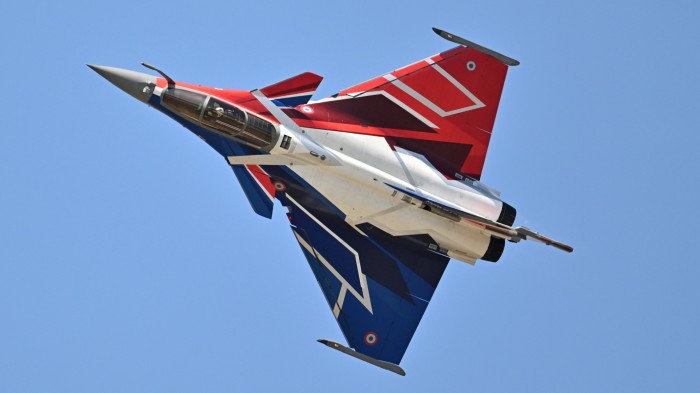
France is home to some of Europe’s big defence companies, such as Thales, whose products include systems for drones and radars; Dassault, the group behind the Rafale fighter jet; and submarine maker Naval Group.
BNP Paribas said that all of its sectoral policies were regularly updated, adding: “The update of the defence and security policy reflects the group’s long-standing commitment to supporting the financing of defence companies, primarily within Nato countries, mostly in Europe.”
Other European banks are also positioning themselves to benefit from the continent’s surge in defence spending. Deutsche Bank has set up a cross-divisional task force of about 40 bankers from corporate and investment banking to focus on defence and infrastructure.
The German lender said it had since initiated about 20 transactions ranging from capital markets deals to M&A and lending across the sector, and had already mobilised commitments in the “mid-double-digit billions of euros”.
Additional reporting by Sarah White in Paris and Florian Müller in Frankfurt
Read the full article here