


Unlock the Editor’s Digest for free
Roula Khalaf, Editor of the FT, selects her favourite stories in this weekly newsletter.
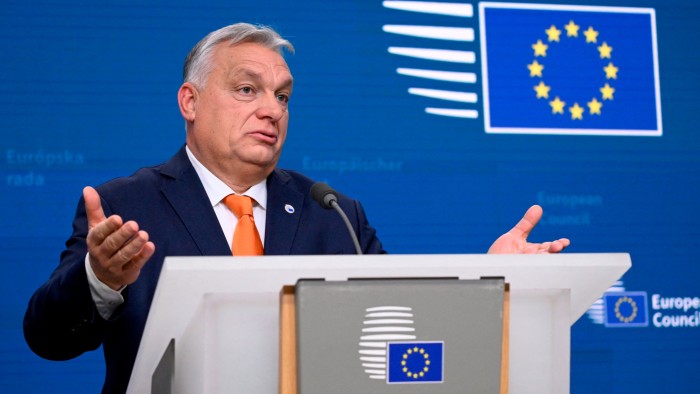
The European Commission plans to unfreeze about €550mn in EU funds to Hungary as Brussels seeks to overcome Prime Minister Viktor Orbán’s veto against more Russia sanctions.
The bloc is under pressure from Washington to tighten the screws on Moscow’s economy by halting all energy imports and targeting companies in countries such as India and China that are buying Russian oil, as US President Donald Trump’s attempts at brokering peace between Russia and Ukraine falter.
But the bloc can only adopt the new sanctions by unanimity, with Hungary and Slovakia — the EU’s last remaining importers of Russian oil — having threatened to veto the measures.
EU ambassadors discussed the raft of restrictive measures presented by the commission on Friday. The commission this week said they would target “crypto, banks and energy” and speed up the bloc’s phaseout of Russian fossil fuel imports, which is set for 2027.
Orbán, who faces parliamentary elections next year, has repeatedly balked at reducing his country’s reliance on cheap energy imports from Russia and has repeatedly delayed the adoption of sanctions against Moscow.
Brussels froze about €22bn worth of EU funds earmarked for Hungary in 2022, owing to concerns over judicial independence, asylum rights, LGBT+ discrimination and academic independence.
But the commission gradually released those funds to placate Orbán: a €10bn tranche was unfrozen in 2023 to get Budapest to drop a veto on Ukrainian aid. Earlier this year, the country received another €157mn by using a legal loophole that authorises Hungary to move frozen funds to different programmes.
It is the same loophole that Budapest is seeking to exploit again.
Back in May, Hungary requested €605mn as part of a wider scheduled “midterm” review of how countries spend their share of the EU’s common budget.
After months of negotiations, Brussels is set to authorise Budapest to receive the vast majority of the requested funds, or about €550mn, according to two people familiar with the discussion.
The commission did not immediately respond to a request for comment.
Read the full article here