


Stay informed with free updates
Simply sign up to the War in Ukraine myFT Digest — delivered directly to your inbox.
Brussels is preparing ways to use Russia’s frozen assets to back €170bn of “reparation loans” to Ukraine, a move that would transform Kyiv’s finances but risk a major confrontation with Moscow.
The plans, long sought by Ukraine but under fierce debate within the EU, aim to enable Russian cash in effect to be transferred to Ukraine without technically seizing the assets outright.
Under one scheme, according to five officials familiar with the preparations, the cash balances of Russian central bank assets under sanctions, which are held at the Belgium-based central security depository Euroclear, would be used to buy zero interest EU bonds.
The capital raised would then be transferred to Ukraine in tranches.
About €170bn of the €194bn of Russian assets held at Euroclear have matured and now sit as cash balances on Euroclear’s books, according to two people familiar with the matter.
A second option would use a special purpose vehicle to manage the funding arrangements, which may allow non-EU countries to participate.
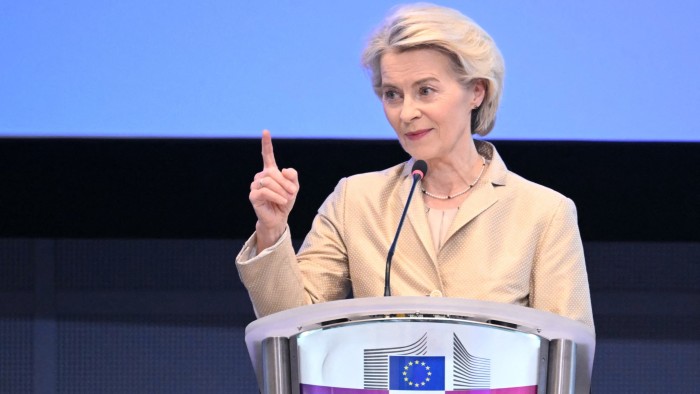
European Commission president Ursula von der Leyen last week backed the reparation loans idea, saying it would only need to be repaid if Russia agreed to compensate Kyiv for invasion damage. Rather than wait for the end of the conflict, the money “will help Ukraine already today”, she said.
Brussels has intensified technical work on the proposal as the prospects for peace negotiations recede, with Russia sticking to its maximalist goals in Ukraine and the Trump administration reluctant to step up economic pressure on Moscow or boost Ukraine’s military capabilities.
Washington has also been pressing its allies to tap Russia’s underlying assets, not just the profits that have been used to underwrite a $50bn loan to Ukraine last year. The G7 should “consider seizing (or otherwise use) the [Russian sovereign assets] principal innovatively to fund Ukraine’s defence”, according to a US note circulated to G7 members and seen by the Financial Times.
EU finance ministers gathering in Denmark this week are set to discuss the reparations loans idea.
The commission’s arrangements aim to overcome objections from several EU member states — notably Belgium, Germany and France — which are concerned that seizing the principal as opposed to interest would go beyond the law or undermine confidence in the euro as a reserve currency.
Ukraine is counting on $50bn in budgetary support next year, on top of military assistance, and Europe will have to shoulder most of the burden given Washington’s refusal to provide further aid.
“[The Ukrainians] need the money, and there’s not so many options,” said a German official familiar with the plans.
Chancellor Friedrich Merz has warmed up to the ideas developed by the commission, given the constraints on national budgets and that the EU has depleted its own lending capacity.
His diplomatic adviser Günther Sautter told a conference in Kyiv that Europe’s frozen assets discussion “is way too slow. But it is moving. And it is moving in a certain direction” — first by using the profits generated by the funds “and now there is a proposal on the table for how they could be used in a way that is even more proactive . . . and that has the potential to speed things up”.
The discussion was good in itself, Sautter added, “because it creates insecurity on the Russian side”.
Key elements of the scheme remain under discussion. The use of EU bonds, for instance, would require EU member states to guarantee the loans. “The risk will have to be carried collectively,” von der Leyen said during her announcement last week, in a nod to Belgium’s concerns about being found liable in any litigation launched by Russia.
Another potential hurdle is ensuring the underlying assets stay frozen. Currently the EU sanctions — under which Russia’s assets are blocked — need unanimous support from EU member states to be extended every six months.
Issuing long-term bonds backed by Russian assets would require guarantees that the sanctions regime would stay in place for the duration of the loan, one person said.
Kremlin spokesperson Dmitry Peskov warned on Monday that the use of Russia’s assets “will not go unanswered”.
The commission said it would “act as swiftly as possible to enable further financial support for Ukraine”.
“Any such initiative will be based on Ukraine’s most urgent needs and in close consultation with member states and international partners,” the spokesperson added.
Euroclear declined to comment.
Additional reporting by Ben Hall in Kyiv
Read the full article here