

Stay informed with free updates
Simply sign up to the Automobiles myFT Digest — delivered directly to your inbox.
Asian car producers revealed the strains from US President Donald Trump’s tariffs on Thursday, reporting tumbling profits and a spillover effect on competition in auto markets around the world.
Japan’s Mitsubishi Motors warned of “unprecedentedly challenging conditions” due to hefty tariffs on vehicle imports to the US and rivals redirecting exports to other markets to compensate for declining sales in America.
South Korean auto giant Hyundai Motor reported a 22 per cent year-on-year drop in second-quarter net profit, as it suffered a Won828bn ($604mn) hit as a result of US tariffs.
Mitsubishi Motors’ net profit in the three months to June was virtually wiped out from ¥29.5bn ($201mn) a year earlier, as it recorded ¥14.4bn of tariff and higher incentives costs. It also suffered a 3 per cent sales drop to ¥609bn.
“Due to sluggish sales in the US, there has been an impact of intensified competition in various forms in other regions as well,” said Kentaro Matsuoka, executive vice-president of the Japanese group. That extra level of competition adds to the existing pressure on legacy carmakers from the advance of Chinese electric car manufacturers.
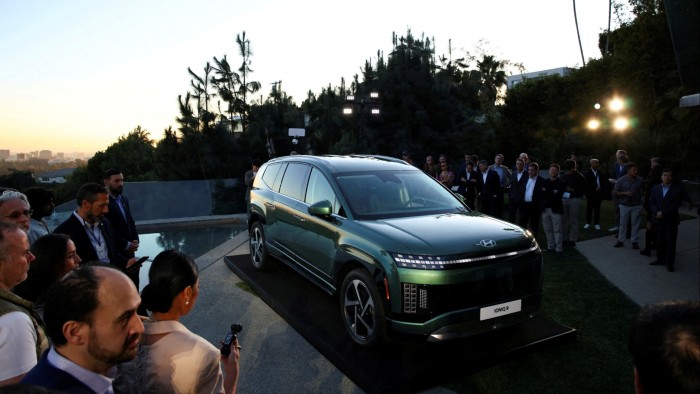
Hyundai, which together with sister company Kia forms the world’s third-largest auto group by sales, managed to increase US sales in the first half of 2025 by 10 per cent compared with a year earlier, as it drew upon existing inventory and vehicles produced at its American manufacturing facilities.
That helped the South Korean group to record revenues of Won48.29tn ($35.2bn) in the three months to June as its global vehicle sales climbed to their highest level since 2020. Mitsubishi also reported a temporary increase in demand in the US ahead of the tariffs coming into force.
Seung Jo Lee, executive vice-president and finance chief of Hyundai, said in an earnings call that while the company could not predict the outcome of trade talks between the US and South Korea, the impact of Washington’s tariffs would “of course be bigger” in the third and fourth quarters, if the levies were to remain in place.
He added that the company would make decisions on pricing strategies in response to moves made by its competitors in the US market.
Hyundai’s declining profitability comes as South Korean officials desperately seek relief from US auto tariffs in trade talks that were scheduled to be held in Washington this week.
Japan secured a reduction in auto tariffs from 27.5 per cent to 15 per cent on Wednesday, providing major relief to its car exporters, of which analysts have identified Mazda, Subaru and Mitsubishi as the most exposed.
Mitsubishi, which last month raised US vehicle prices by 2.1 per cent, said the lower tariff rate was a “potential positive” but left its full-year forecast untouched.
Domestic pressure is mounting on the South Korean government to seal an agreement at least on a par with the 15 per cent tariff secured by Japan. In comparison, Korean auto exports to the US are still subject to a 25 per cent tariff imposed by President Donald Trump in April.
While “2+2” talks between the South Korean finance and trade ministers and their US counterparts had been scheduled to take place in Washington on Friday, Seoul’s finance ministry confirmed on Thursday that they would be postponed, after US Treasury secretary Scott Bessent pulled out owing to a scheduling conflict. Talks are still expected to take place between the two countries’ trade envoys.
Hyundai and Kia have transformed their business in the US from a little-known foreign entrant to one of the market’s most dominant marques, particularly in EV sales.
Read the full article here