


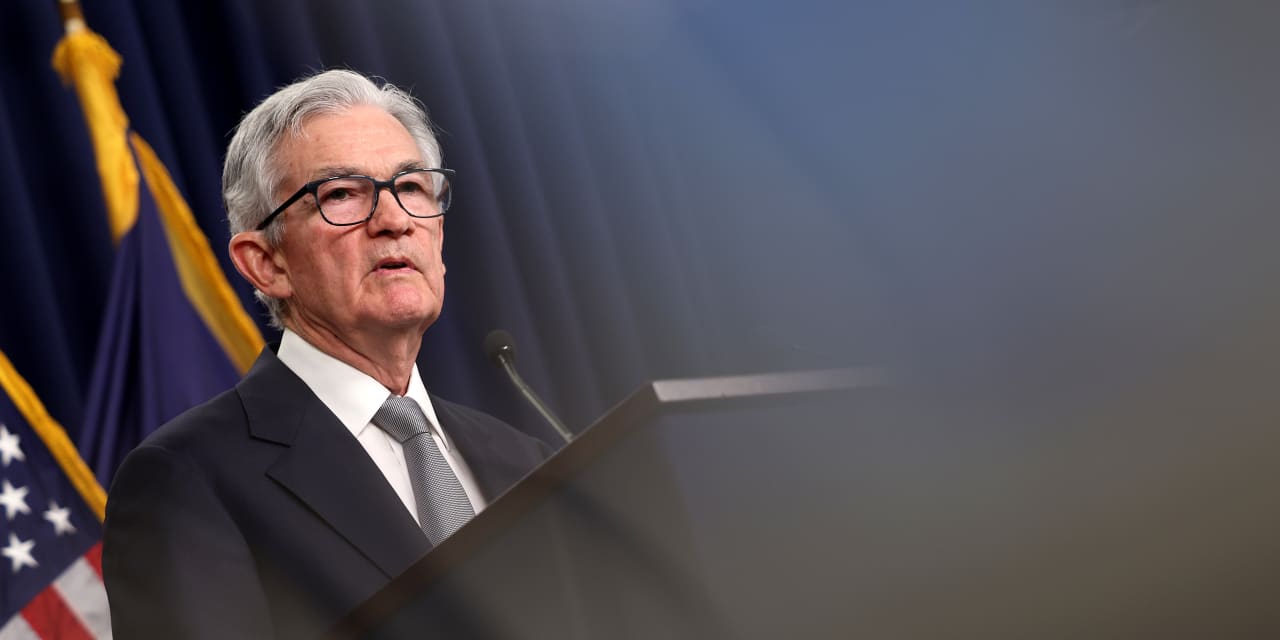
Minutes of the latest Federal Open Market Committee meeting, released Tuesday, reflected unanimity among members that monetary policy must remain restrictive “for some time” until inflation is clearly moving toward the Federal Reserve’s 2% goal. Fed officials opted again to maintain a holding pattern on interest rates to assess the lagged effects of tighter monetary policy.
Officials generally noted that it was important to balance the risk of tightening policy too much against the danger of doing too little, according to the minutes of the Oct. 30-Nov. 1 meeting. With inflation still well above the 2% target and the labor market still tight, “most participants” saw the risk of failing to tame inflation as the bigger issue.
“Participants noted that inflation had moderated over the past year but stressed that current inflation remained unacceptably high and well above the Committee’s longer-run goal of 2%,” the minutes stated.
Given that so many economic indicators remain in flux, Fed officials gave no indication during the meeting that they were considering rate cuts. Instead, they continue to see risks to achieving their inflation target, and even noted that further tightening could be “appropriate” if future data show insufficient progress.
“The Fed will keep talking tough on inflation as it patiently waits for the full effects of previous rate hikes,” writes Jeffrey Roach, chief economist for LPL Financial. “Markets should expect Powell and other committee members to remain hawkish in tone, but that doesn’t necessarily imply the Fed will hike further.”
Fed officials judged that the current stance of monetary policy was restrictive and was putting downward pressure on economic activity—and inflation.
Even though officials believe the U.S. economy and labor market remain strong, they noted that the FOMC’s previous rate hikes, which are expected to hit the economy with a lag, pose substantial risks.
Fed policy makers chose to keep the target for the federal-funds rate at 5.25%-5.50% after the November meeting; the rate was last increased in July. “Participants judged that maintaining this restrictive stance of policy at this meeting would support further progress toward the Committee’s goals while allowing more time to gather additional information to evaluate this progress,” according to the minutes.
Tuesday’s minutes also revealed that Fed officials had a robust conversation about the tighter financial conditions that resulted from a substantial rise in longer term Treasury yields, among other factors. “Participants highlighted that longer term yields could be volatile and that the factors behind the recent increase, as well as their persistence, were uncertain,” according to the minutes.
They said that whatever the source of the rise in yields, persistent changes in financial conditions could have wider implications for the path of monetary policy, making it important to continue to closely monitor developments in that area.
All members of the rate-setting committee agreed that the central bank should proceed carefully, given what the minutes described as a “high degree of uncertainty” in the U.S. economic outlook. The minutes also showed that policy makers reaffirmed their stance that decisions would be made meeting by meeting and would be based on the “totality of incoming information and its implications for the economic outlook as well as the balance of risks.”
Officials remain optimistic that data arriving in coming months will help clarify the extent to which inflation is slowing and help quantify the progress the labor market has achieved toward a better balance between demand and supply.
Specifically, officials called out the risk that resilient consumer spending could pose, particularly if it persists longer than expected. Members noted the possibility that progress in reining in the rate of price increases could stall, and that inflation could even reaccelerate given the economic momentum seen in recent months.
On the other hand, tighter financial conditions could have larger-than-expected consequences for U.S. households’ budgets and businesses’ balance sheets. Fed officials discussed the possibility that this fall’s resumption of student-loan repayments, for example, could hurt household spending more than anticipated.
The Fed staff expects fourth-quarter gross domestic product growth to “slow markedly” from the nearly 5% third-quarter rate noted in initial estimates, but stopped short of reinstating an earlier forecast that called for a recession in the near term. The staff expected the United Auto Workers’ strike against
Ford Motor
(ticker: F), General Motors (GM), and
Stellantis
(STLA) to be a major factor in temporarily restraining growth in the fourth quarter, but noted the size and timing of the effects were still “highly uncertain.”
The Fed staff also noted that there were “notable” financial vulnerabilities in the U.S. financial system, including pressures stemming from asset valuations, leverage, and funding risks. Yet Fed policy makers undercut those concerns a bit by noting the banking system was “sound and resilient” and further highlighted that the stresses seen earlier in the year had subsided.
Given that the effects of restrictive monetary policy continue to ripple through the economy, the Fed staff forecast that real GDP growth would be slower than the estimate of 1.5% next year and 1.8% in 2025 listed in the September economic projections, before rising in line with expectations for 1.8% growth in 2026. The staff expected unemployment to remain roughly flat through 2026.
FOMC members continue to predict that the U.S. will need to experience below-potential real GDP growth and some further softening in labor-market conditions to bring inflation back down to 2%.
Write to Megan Leonhardt at [email protected]
Read the full article here