


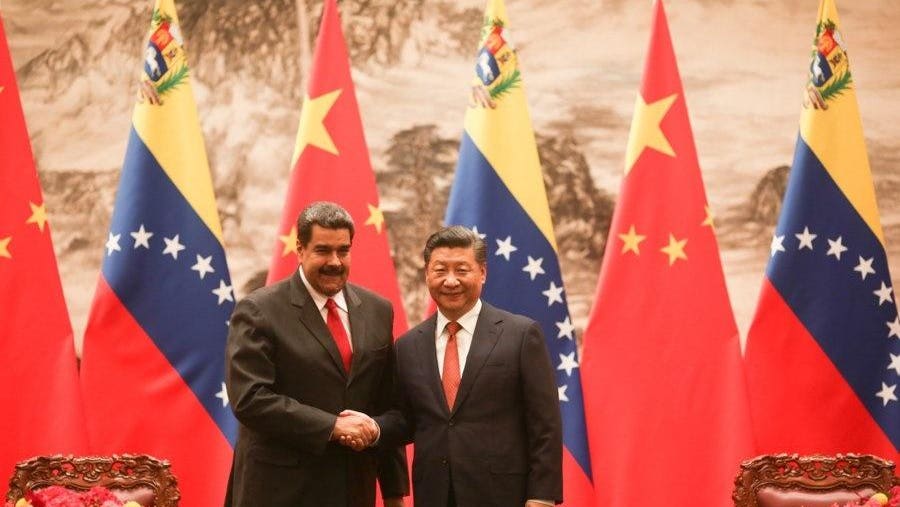
Winning the renewable energy race is essential to who controls the narrative and sets global standards. From the annual UN General Assembly meetings to the G20 and The BRICS to (now the “Expanded BRICS”) highlight how nations place importance on developing alternative forms of energy— solar being a key example— and creating competitive ecosystems are redefining traditional and non-traditional industries and geopolitical alliances. This is the new global architecture in solar energy. Dynamics in the Western Hemisphere, a once bastion and a symbol of America’s global influence, have changed in the past two decades. A lack of concerted attention from the U.S. government and private actors has prompted Latin America and the Caribbean (LAC) governments to look east for development assistance and a more reliable trade partner. On September 13th, Chinese President Xi and Venezuelan President Maduro upgraded their relationship to an “All weather strategic partnership” and signed agreements in economy, trade and tourism, science and technology, civil aviation, and aerospace. The lure of Chinese capital is too attractive for nations in the region to ignore. Data from the IMF, show for two decades, China has surpassed the United States as South America’s largest trading partner.
However, trade data from the World Bank suggests that The US is still Latin America’s largest trade partner.
Who should the public believe? What is certain is China’s intentional and sustained economic engagement in LAC evidenced by more than USD 137 billion in sovereign loans to Latin American countries since 2005, notes Margaret Myers, Director of The Asia and Latin America Program at The Inter-American Dialogue.
LAC’s exports to China rose from 1.3 percent in 2000 to 14.5 percent in 2020. China also set up three regional funds to back investments in the region: the China-LAC Industrial Cooperation Investment Fund with a size of US$30 billion; the China-LAC Cooperation Fund of US$10 billion; and the Special Loan Program for China-Latin America Infrastructure of US$20 billion. In response to increased Chinese engagement with LAC, the U.S. has increased investment and attention to the region, and competition particularly in solar power is acutely intensifying.
Solar Power in LAC
LAC’s voracious appetite for investment in renewable energy is palpable. It averages 217 days of sunshine a year and Solargis’s resource map shows that the region ranks high in PV electricity potential. Solar power currently only generates 3-4 percent of electricity across LAC. However, LAC has the most extensive solar power project lineup outside East Asia and North America. The region is constructing over four times the amount of solar capacity in Europe and seven times more than India. Global Energy Monitor, states that Latin America has the potential to increase its wind and solar power capacity by more than 460 percent by 2030. As climate change increases the frequency of devastating storms, it is imperative that LAC ensure continued power generation through domestic means. For example, after Hurricane Irma devastated the Bahamas, the government created solar power microgrids to provide residents renewable energy on Ragged Island.
Brazil, Mexico, Colombia, Chile, and Peru represent the majority of current solar projects and account for over 88% of installed solar capacity and about 97% of planned capacity in construction. However, there is still time for the U.S. to get a piece of the action.
The U.S.
Solar power is the fastest-growing and most affordable source of electricity in America. In 2022, more than 263,000 Americans are working in solar at over 10,000 companies and the industry generated nearly $35 billion in private investment. Aiming to capitalize on this investment, American developmental aid organizations emphasize Environmental, Social & Governance (ESG) focused investment.
In 2019, LAC launched the Renewable Energy
REGI
A company at the forefront of solar panel production is First Solar
FSLR
China
China holds a considerable advantage over the U.S. in its solar production. It represents over 80 percent of the supply chain and has spent ten times as much on solar manufacturing compared to the U.S. and Europe. Data from Boston University’s China Global Energy Finance database, show that China’s developmental finance institutions like the China Development Bank and China Export-Import Bank, have provided $10 billion in funding for energy generation in LAC since 2000. Many of these projects are run by state-owned firms, such as PowerChina, which has over fifty ongoing projects in Latin America as of 2022. Chinese companies are also involved in two of the largest projects in the region. In Argentina, the Cauchari photovoltaic complex is developed as a China BRI project. Phase one began in 2018 with an initial investment of $390 million. The project’s new phase was agreed upon in 2022, during President Alberto Fernandez’s trip to China. The other major project is a $1 billion, 1.1 Gigawatt solar project near Açu, Brazil, that Chinese firms are expanding. On Sept. 22, China Signal reported that three out of four bidders for Bogota, Colombia’s second metro line are Chinese state owned enterprises. Chinese Deputy Minister Liu Hanyuan described China’s willingness to assist the Caribbean with its transition to renewable energy, “there are absolutely no limitations for the transmission of this technology into the Caribbean region. But we need two things, more demand and the new systems being established, which will help bring lower energy costs.”
Conclusion
As climate change intensifies, solar power offers a sustainable solution. With its abundant sunshine and potential for PV technology, LAC are poised for increased investment in renewable energy. The U.S. cannot afford to sit idly, while China determines the region’s energy future. The Biden administration has taken initial steps to re-engage the region as highlighted by the U.S. National Renewable Energy Laboratory helping to train workers in Antigua and Barbuda to install solar panels, batteries, and hurricane-resistant turbines. Vice President Kamala Harris also announced $20 million to support the Caribbean Climate Investment Program. However, the US must marshal its collective resources more effectively to lead, solicit feedback and collaborate with LAC nations to set environmental and sustainability standards for the region. A report published earlier in the year by the U.N. Committee on Economic, Social, and Cultural Rights identified 14 cases of human rights or environmental hazards by Chinese projects in Latin America. Chinese initiatives also frequently show little consideration for the homes of indigenous communities in areas designated for development. The report stated, “Chinese investors and financiers do not comply with due diligence processes, and decide to carry out business activities in areas with a documented high potential for social conflict and environmental risks.” Leverage America’s common values in the Western Hemisphere, and action targeted social entrepreneurship engagement, technology, pricing, coupled with humility and cultural competence. These collective efforts sustained over time will reduce the region’s dependency on foreign energy sources.
The endeavor will be challenging. China’s capability in producing solar panels and lack of historical grievances from the region give it an inherent advantage. The U.S. must resolve to be consistent and seek innovative ways to remain competitive in LAC’s renewable energy transition. China is currently winning the race, but by no means is the race over. The US needs to up its game.
Special thanks to Nathaniel Schochet for his exceptional thought leadership, research, and editorial contributions to this article.
Read the full article here