


By using this site, you agree to the Privacy Policy and Terms of Use.
Accept
AmextaFinanceAmextaFinance
  • Home
  • News
  • Banking
  • Credit Cards
  • Loans
  • Mortgage
  • Investing
  • Markets
    • Stocks
    • Commodities
    • Crypto
    • Forex
  • Videos
  • More
    • Finance
    • Dept Management
    • Small Business
Notification Show More
Aa
AmextaFinanceAmextaFinance
Aa
  • Banking
  • Credit Cards
  • Loans
  • Dept Management
  • Mortgage
  • Markets
  • Investing
  • Small Business
  • Videos
  • Home
  • News
  • Banking
  • Credit Cards
  • Loans
  • Mortgage
  • Investing
  • Markets
    • Stocks
    • Commodities
    • Crypto
    • Forex
  • Videos
  • More
    • Finance
    • Dept Management
    • Small Business
Follow US
AmextaFinance > News > U.S. Economy Less Interest Rate Sensitive
News

U.S. Economy Less Interest Rate Sensitive

News Room
Last updated: 2023/08/01 at 12:17 AM
By News Room
Share
3 Min Read
SHARE

By Blu Putnam

At A Glance

  • The U.S. unemployment rate has only been at or below 4% less than 15% of the time since 1960
  • If a recession were to develop, rapidly rising new weekly unemployment insurance claims can be an early indicator

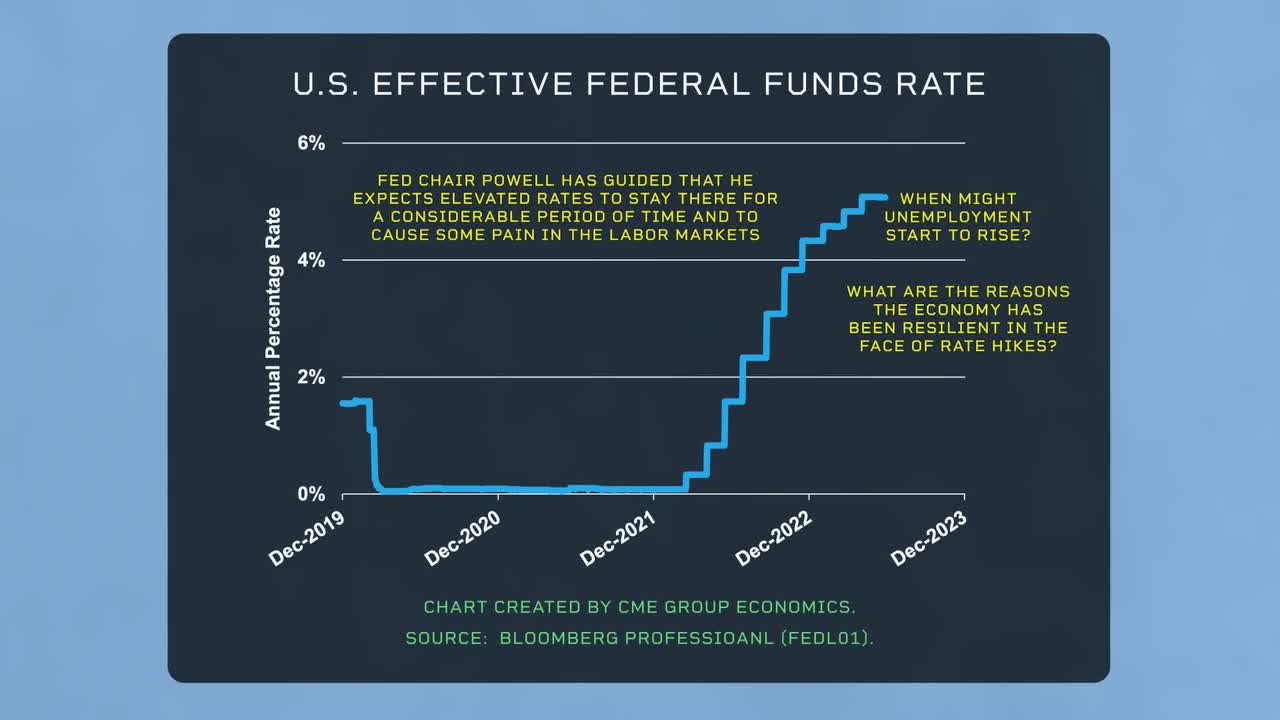
Despite the fastest rise in interest rates since 1981 and an inverted yield curve where short-term rates are much higher than long-term bond yields, the United States has not (at least yet) experienced the recession forecast by the vast majority of market pundits and economists. Why not?

The relatively few contrarians that did not forecast a recession, including myself, had many reasons for a more optimistic view. However, the most critical reason appears to have been an appreciation of how the U.S. economy has changed over decades and become much less sensitive to interest rates.

Fed Funds

Bloomberg Professional

In the 1950s, 1960s, and 1970s, the U.S. economy was driven by housing and manufacturing. The only choice to finance a home was the 30-year fixed rate mortgage, provided by a savings and loan institution, that deliberately borrowed short-term from savers and lent long-term, taking considerable interest rate and yield curve risk. Further, there was no such thing as financial futures or interest rate swaps to allow for the efficient hedging of interest rate risk.
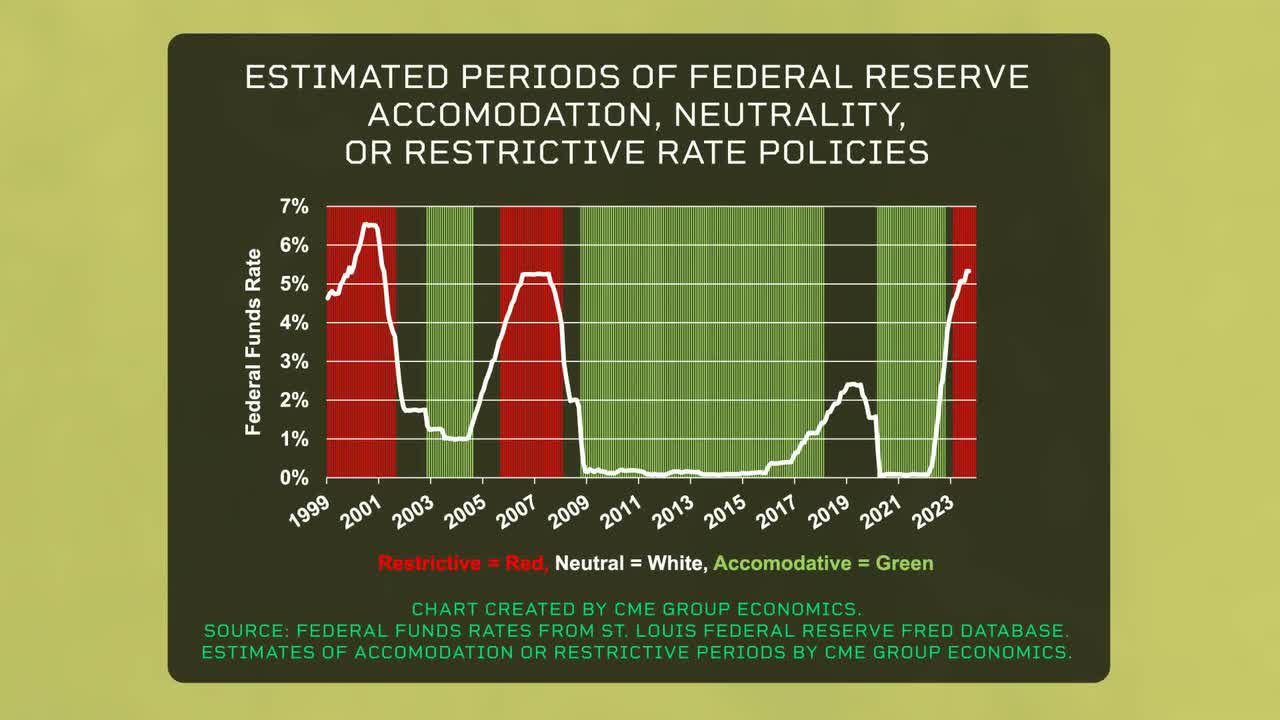
Fed Policy

Fast forward to the modern economy of the 2020s. The U.S. is an economy driven by the service sector, and services are considerably less sensitive to interest rate swings than housing and automobiles. Home mortgages come in every size and flavor, from floating rates to fixed rates. Mortgages are originated by specialists and then packaged and sold to pensions, endowments, and investors willing to take the risk. There are no savings and loan institutions. Financial futures, swaps, and options are available for efficient hedging and management of interest rate risk.

In short, the U.S. economy does not dance to interest rates like it once did. Make no mistake, though; interest rate shifts have a profound impact on asset values, from equities to bonds, to housing. It is just that the impact on the real economy is much more subdued than it once was, and a rise in rates does not automatically mean a recession is around the corner.

Original Post

Editor’s Note: The summary bullets for this article were chosen by Seeking Alpha editors.

Read the full article here

News Room August 1, 2023 August 1, 2023
Share this Article
Facebook Twitter Copy Link Print
Leave a comment Leave a comment

Leave a Reply Cancel reply

Your email address will not be published. Required fields are marked *

Finance Weekly Newsletter

Join now for the latest news, tips, and analysis about personal finance, credit cards, dept management, and many more from our experts.
Join Now
Waymo in talks to raise funds at $100bn valuation

Unlock the Editor’s Digest for freeRoula Khalaf, Editor of the FT, selects…

Why U.S. Shipbuilding Collapsed — And The Push To Rebuild It

Watch full video on YouTube

The US real estate market is stuck: Why a 50-year mortgage won’t help lower costs

Watch full video on YouTube

Wall Street rainmakers scrap for windfall from Warner Bros deal

Some of Wall Street’s biggest rainmakers are vying for a windfall as…

Ark Restaurants Corp. (ARKR) Q4 2025 Earnings Call Transcript

Operator Greetings, and welcome to Ark Restaurants Fourth Quarter and Year-End 2025…

- Advertisement -
Ad imageAd image

You Might Also Like

News

Waymo in talks to raise funds at $100bn valuation

By News Room
News

Wall Street rainmakers scrap for windfall from Warner Bros deal

By News Room
News

Ark Restaurants Corp. (ARKR) Q4 2025 Earnings Call Transcript

By News Room
News

MindWalk Holdings Corp. (HYFT) Q2 2026 Earnings Call Transcript

By News Room
News

Ukraine claims strike on Russian submarine with underwater drones

By News Room
News

Meridian Corporation Justifies Greater Upside From Here (NASDAQ:MRBK)

By News Room
News

What economists got wrong in 2025

By News Room
News

Quanex Building Products Corporation (NX) Q4 2025 Earnings Call Transcript

By News Room
Facebook Twitter Pinterest Youtube Instagram
Company
  • Privacy Policy
  • Terms & Conditions
  • Press Release
  • Contact
  • Advertisement
More Info
  • Newsletter
  • Market Data
  • Credit Cards
  • Videos

Sign Up For Free

Subscribe to our newsletter and don't miss out on our programs, webinars and trainings.

I have read and agree to the terms & conditions
Join Community

2023 © Indepta.com. All Rights Reserved.

YOUR EMAIL HAS BEEN CONFIRMED.
THANK YOU!

Welcome Back!

Sign in to your account

Lost your password?