


Unlock the White House Watch newsletter for free
Your guide to what the 2024 US election means for Washington and the world
The writer is an FT contributing editor and writes the Chartbook newsletter
Development policy in the west is going through a grim and largely silent counter-revolution. Not only has the US shut down USAID and the UK slashed development aid, but there have also been cuts to the French, Belgian and Dutch budgets.
The latest warnings come from Berlin, where the new coalition has put the development budget on the chopping block. In a worst-case scenario, global aid budgets could be slashed by a staggering $74bn in 2025 alone. That would be 30 per cent or so of total overseas development assistance, or ODA, a disaster at a time when the poorest countries are labouring under excessive debts. If fiscal times are tough in the global north, they are worse in the south.
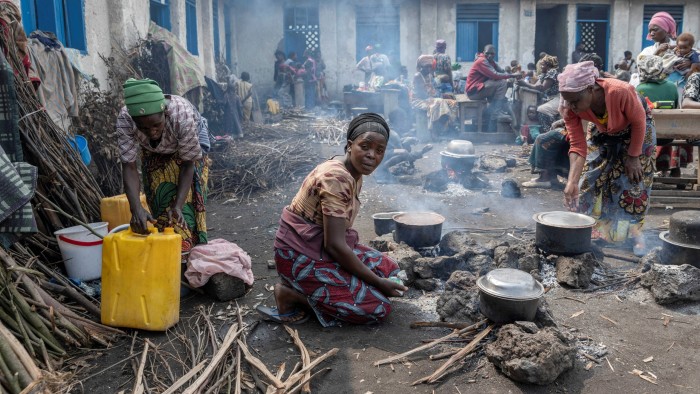
In the west this rollback of ODA is discussed as collateral damage of the ideological battles in Washington, of budgetary austerity and the new priority — rearmament. On the ground, the damage will be huge. The Democratic Republic of Congo, where millions are displaced and at risk of malnutrition, relies for almost 70 per cent of its aid on the US. Across the developing world, millions of lives are at risk as major public health programmes are rolled back.
On its face, the idea that new national security imperatives require shifting funds from development to defence makes no sense. You don’t improve global security by allowing the World Food Programme to run out of funds to feed 2mn desperate people in the Sahel.
This ought to be obvious. But does it any longer register? The current cuts are so deep that they amount to an abandonment of the holistic common sense under which global development, sustainability and security were once seen as joined at the hip. Faced with the challenge of Vladimir Putin and Donald Trump, what matters now is rearmament, narrowly conceived.
We are witnessing a historical turning point. In a chain reaction, first the US and now the Europeans are retreating from the vision of sustainable development that originated in the late 1980s. Its bookends were the Brundtland report on sustainable development of 1987 and the double deal of September and December 2015, first on sustainable development at the UN and then in Paris on climate. With hindsight, the 2015 consensus on sustainable development encapsulates the last moment of “normality” before the polycrisis exploded.
In terms of the shattering of liberal norms, the second Trump administration is crasser even than the first. But, on the European side too, things have gone from bad to worse. The fact that European countries are retreating en masse from the target of devoting 0.7 per cent of GDP to aid, is, in its own way, even more egregious. What is Europe’s excuse? Unlike Trump and the Maga mob, the Europeans can’t plead that they don’t know better.
You might shrug and say that the 2015 deals were mainly symbolic. Only a few ever met the 0.7 per cent target. But such goals are not without effects. Aid budgets did ratchet up. African governments gained greater voice in the G20. Progress came not in great leaps, but in iterative efforts.
There were huge doses of hypocrisy, no doubt. But we are witnessing now why hypocrisy and hope are generally to be preferred to cynicism. With the norms stripped away, we risk descending into a free-for-all. Since 2015 the EU has been relying on deals with warlords to police the Sahel. Now putschists answer in kind, cutting deals with Russian mercenaries. The Trump administration has declared the South African ambassador persona non grata and cancelled attendance at G20 events in solidarity with white Afrikaners it views as victims of racial persecution. The government of the DRC, desperate to draw the US back in, is hoping to attract Trump’s attention with shiny mineral deals. Are we looking at a new African scramble? If so, it is a high road to disaster.
Africa’s youth quake is upon us. The climate crisis is here. The urgency of sustainable investment and governance reform is greater than ever. Politicians in the west plead that these problems are a long way away and they have more urgent priorities closer to home. But not only do the opinion polls contradict the most cynical assessment of western publics, this is an issue on which governments have a responsibility to lead.
Every survey shows that the public hugely overestimates the scale of ODA. If voters are told the truth, namely that aid accounts for a tiny fraction of public spending, their attitudes change dramatically. The minimum responsibility of democratic leadership is not to pander to prejudice but to convey real trade-offs in honest terms.
The fact that the world is complicated and interconnected is not a conceit of “Davos man”. Not only will cutting aid contribute to insecurity. The very suggestion that there is any meaningful relation between the needs of rearmament, which run into the hundreds of billions, and the far smaller sum spent on ODA misleads the public and reinforces prejudices. It is not fiscal prudence but crass populism.
Read the full article here